Cargo Operations
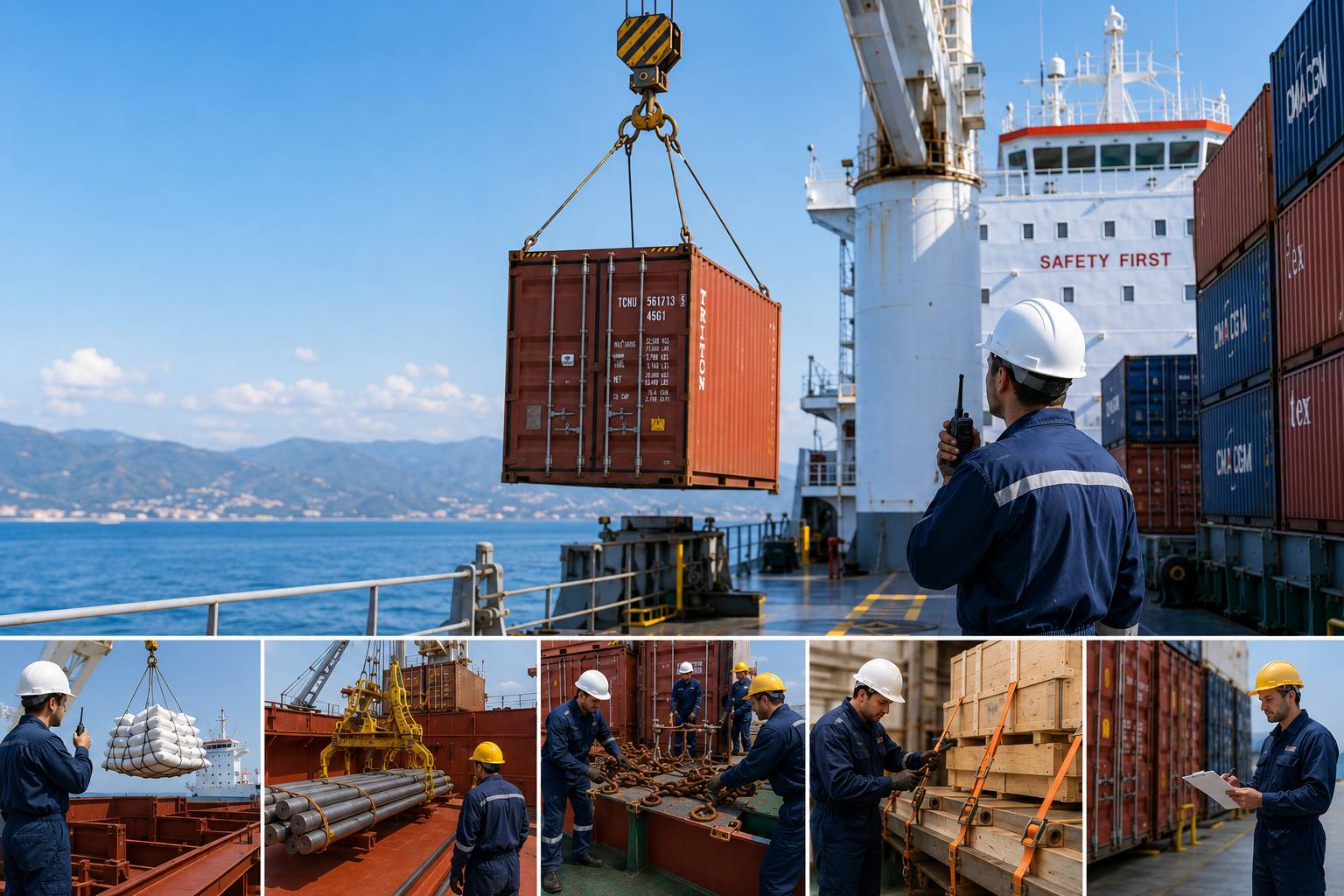
This module introduces students to the main aspects of preparing, carrying out and monitoring cargo operations on board a ship. Students learn about the arrangement of cargo spaces, their technical characteristics and the procedures for preparing them for cargo operations. The module covers cargo systems, equipment, lifting appliances and their safe use.
Students become familiar with the processes of receiving, storing, caring for, transporting, measuring and discharging cargo. Particular attention is paid to compliance with safety standards during cargo handling and stowage. The module also covers the classes of dangerous, harmful and hazardous cargoes, as well as the rules for handling them. Students learn the meaning of dangerous goods markings and symbols in accordance with the IMDG Code.
During the learning process, the use of Material Safety Data Sheets when handling cargo is discussed. The practical component includes cleaning cargo spaces, preparing equipment and participating in cargo handling operations. Upon completion of the module, students are able to participate in cargo operations safely, in an organized manner and in accordance with established procedures.
Read More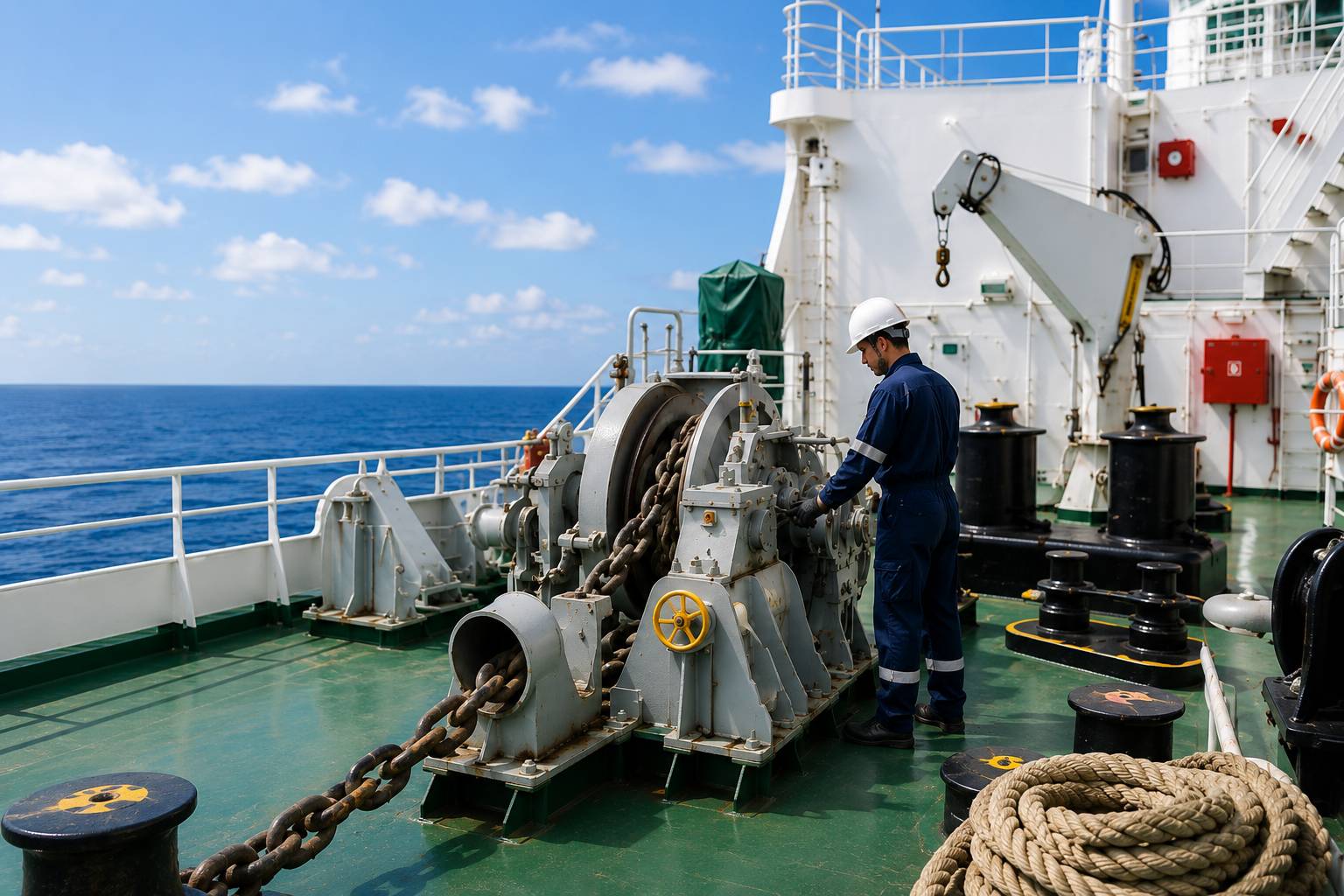
Deck Equipment and Machinery
This module introduces students to the deck equipment and machinery available on board a ship, as well as their purpose and function. Students learn to identify valves, pumps, cranes, winches and related equipment.
During the learning process, windlasses, anchor handling equipment, capstans, hatches, watertight doors and ports are discussed. The module covers the rules for using fibre and steel ropes, chains, cables and rigging materials. Students become familiar with the basic requirements for the operation of pilot ladders, lifeboats and survival appliances. Particular attention is paid to the equipment required for overside work and safe working practices. The module teaches students the purpose and use of pipeline systems, bilge pumps and ballast systems. The practical component includes participation in the proper operation of anchoring equipment, rescue boats and deck operations. Students develop the ability to work in accordance with procedures, follow instructions and apply safety standards. Upon completion of the module, students are able to identify deck equipment and participate safely in basic deck operations
Read More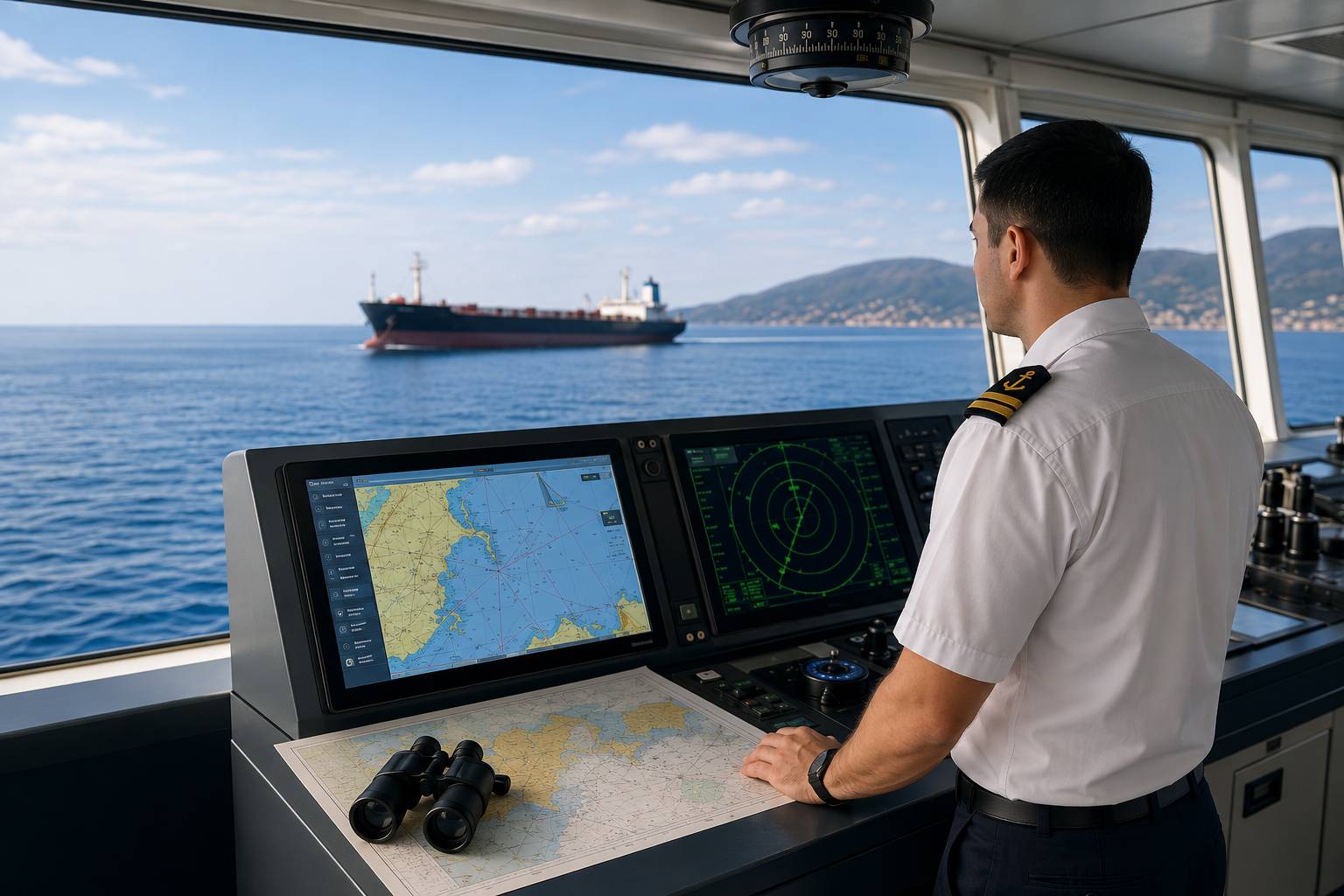
Ensuring Safe Navigation
This module introduces students to the basic knowledge required for safe navigation and the rules for participating in watchkeeping at a support level. Students learn the fundamental concepts of navigation, geographic coordinates, maritime units and the rules for determining directions. The module covers the recognition of visual and sound signals, flags, navigational lights and marks. During the learning process, the basic requirements of COLREG 72 and the principles of preventing collisions between vessels are discussed. Students become familiar with the purpose of the gyrocompass and magnetic compass, as well as the use of navigational equipment available on the bridge. The module develops students’ skills in taking over and handing over a navigational watch, maintaining a proper lookout and reporting information. Students learn English helm orders and how to accurately follow the instructions of a superior officer. The practical component includes bringing the vessel onto a given course, maintaining the course and becoming familiar with steering procedures in emergency mode. The module also covers the basic principles of safe participation in mooring and anchoring operations. Upon completion of the module, students are able to perform support functions during a navigational watch in compliance with safety rules.
Read More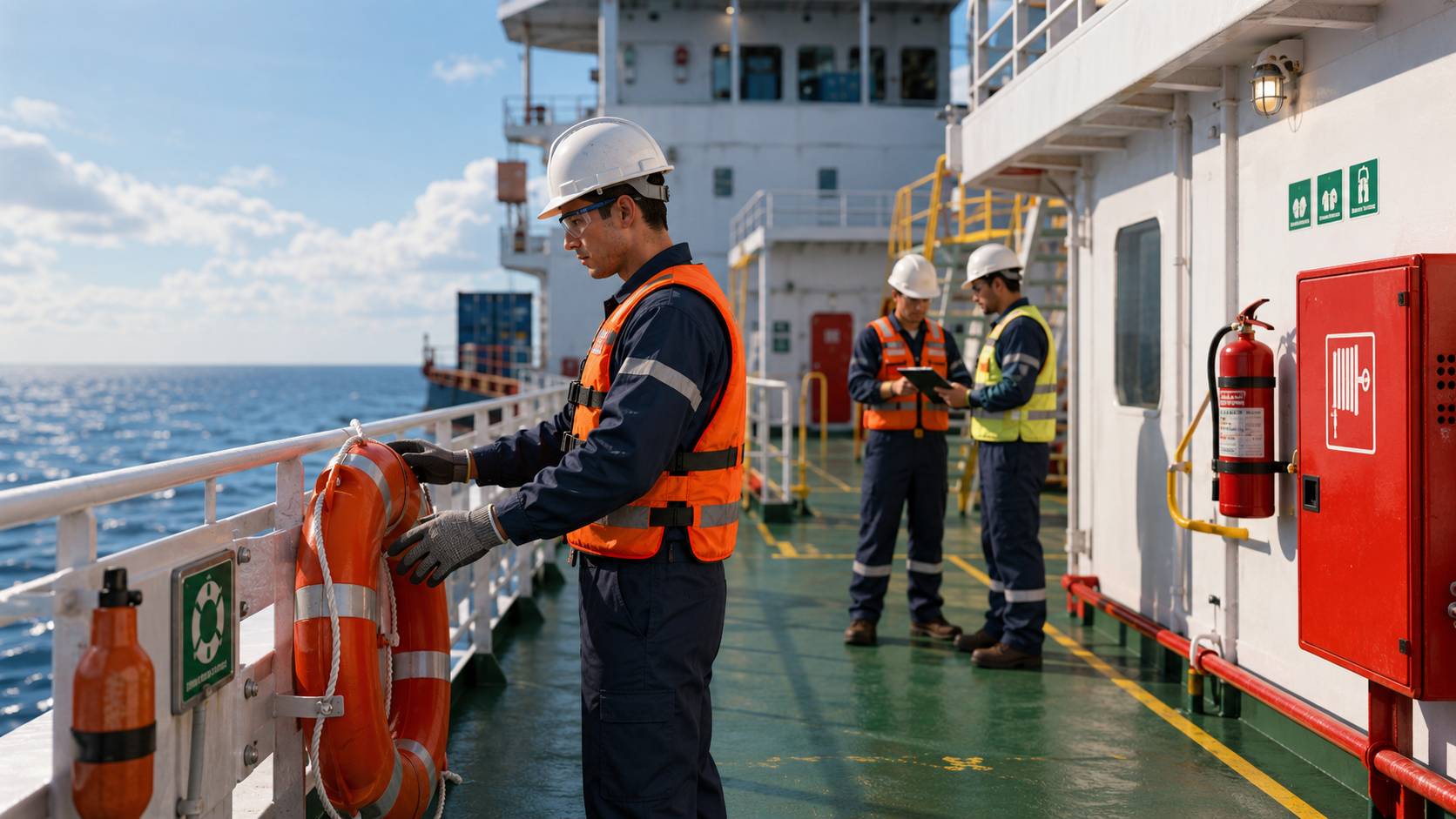
Ensuring Safety on Board
This module provides students with the basic knowledge and practical skills necessary for safe work on board a ship. During the learning process, the main rules of occupational safety, hygiene and personal protection are discussed. Students become familiar with the hazards present on board, including electrical, mechanical, chemical and biological risks. The module covers first aid, fire safety and procedures for responding to emergency situations. Students learn the purpose and use of individual and collective lifesaving appliances. Particular attention is paid to procedures for abandoning ship, survival in water and actions to be taken at muster stations. The module also covers issues related to the protection of the marine environment and the basic requirements of the MARPOL Convention. Students learn the rules for reducing, sorting, processing and delivering waste ashore. Through practical assignments, students develop the ability to apply safety rules in a real working environment. Upon completion of the module, students are prepared to act safely and responsibly on board, in accordance with environmental protection standards.
Read More
Information Literacy
This module develops the digital and information skills required by students in a modern working environment. Students learn to use a computer operating system, files, folders and basic tools.
The module covers searching for information on the Internet and identifying the structure of web addresses and e-mail. Students become familiar with the basic rules of organizing, storing, downloading and processing information. During the learning process, students develop the ability to create and format text documents and save files in the required format.
The module also includes the preparation of electronic spreadsheets and the use of simple formulas, functions and charts. Students learn to prepare presentations, design slides and use visual elements appropriately. Particular attention is paid to the use of e-mail, sending messages, attaching files and communication etiquette.
The module includes the practical use of online storage, file sharing and Web 2.0 opportunities. Upon completion of the module, students are able to use digital tools safely and effectively in their professional activities.
Read More
Entrepreneurship
This module introduces students to the essence of entrepreneurship, entrepreneurial thinking and the process of developing an idea. Students learn to assess their own and their team’s entrepreneurial competencies and to prepare a development plan.
During the learning process, creative thinking, design thinking, lean startup methodology and a value-based approach are discussed. The module helps students identify future opportunities and analyze customer needs. Students learn methods of market research, studying consumer behaviour and assessing the potential of an idea.
The module covers the generation of product or service ideas, prototype development and improvement based on feedback. Students become familiar with SWOT analysis, the Business Model Canvas, PESTLE analysis and the elements of a marketing plan. The learning process also includes business registration forms, resource management and simplified financial accounting.
Students learn how to determine pricing, analyze costs, identify sources of financing and calculate profit. Upon completion of the module, students are able to transform an idea into a business project and plan its practical implementation.
Read More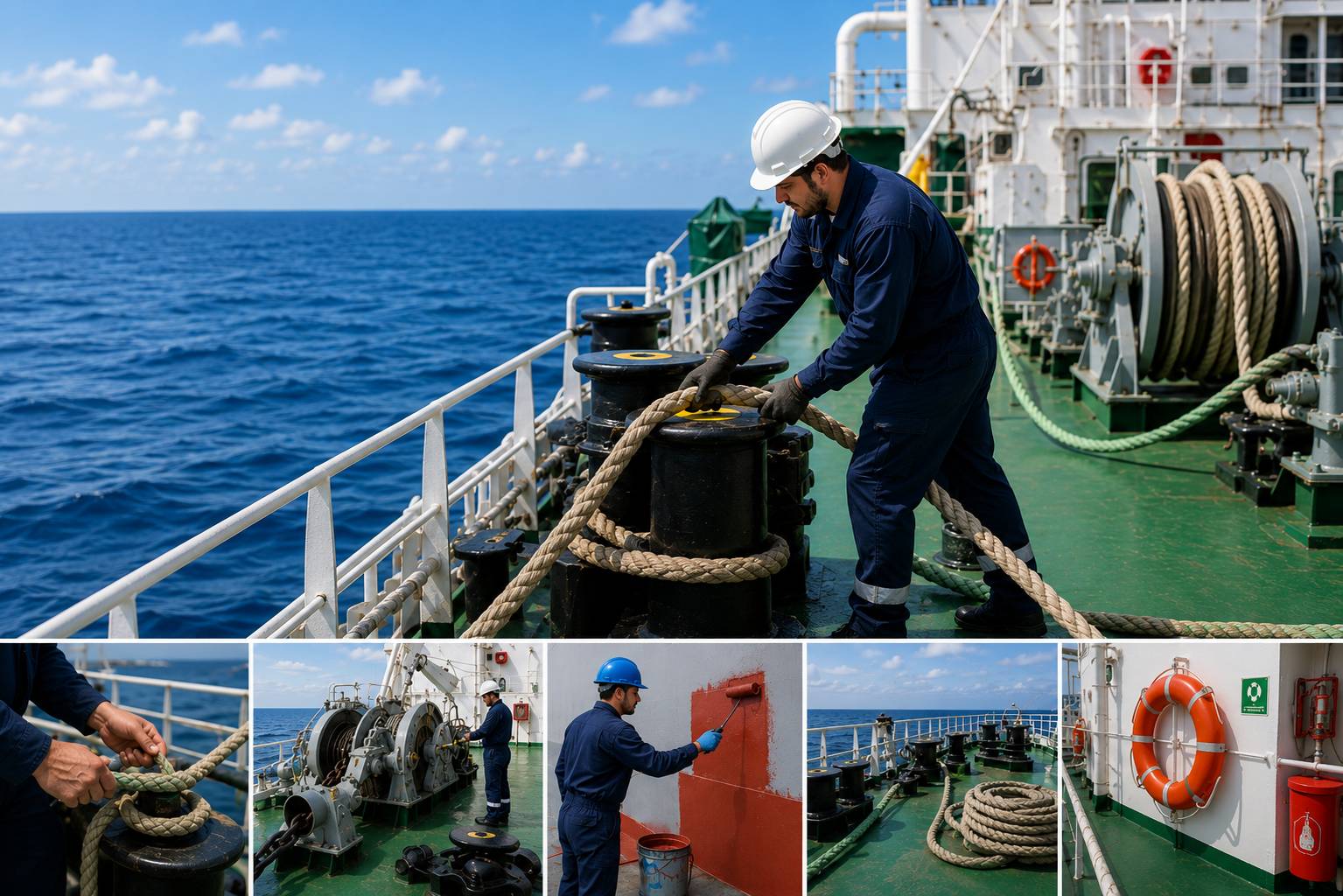
Maritime Practice – for Deck Ratings
The Maritime Practice – for Deck Ratings module represents a practical stage in which students apply the knowledge and skills they have acquired in a real working environment. Students learn to organize the workplace effectively and use material and technical resources properly. The module places particular emphasis on compliance with occupational safety, sanitary-hygienic and environmental protection standards.
During the practice period, students perform professional tasks under supervision and participate in daily work processes. Students learn to allocate work within the available time, complete assigned tasks and meet deadlines. The module develops practical skills in the proper use of materials, tools and equipment.
Students learn to check the quality of completed work and, in case any deficiencies are identified, to inform the appropriate responsible person. An important part of the module is maintaining a practice diary and documenting the work performed. Students prepare a report or presentation on the work carried out during the practice period.
Upon completion of the module, students are ready to perform the main functions of a deck rating in a real working environment.
Read More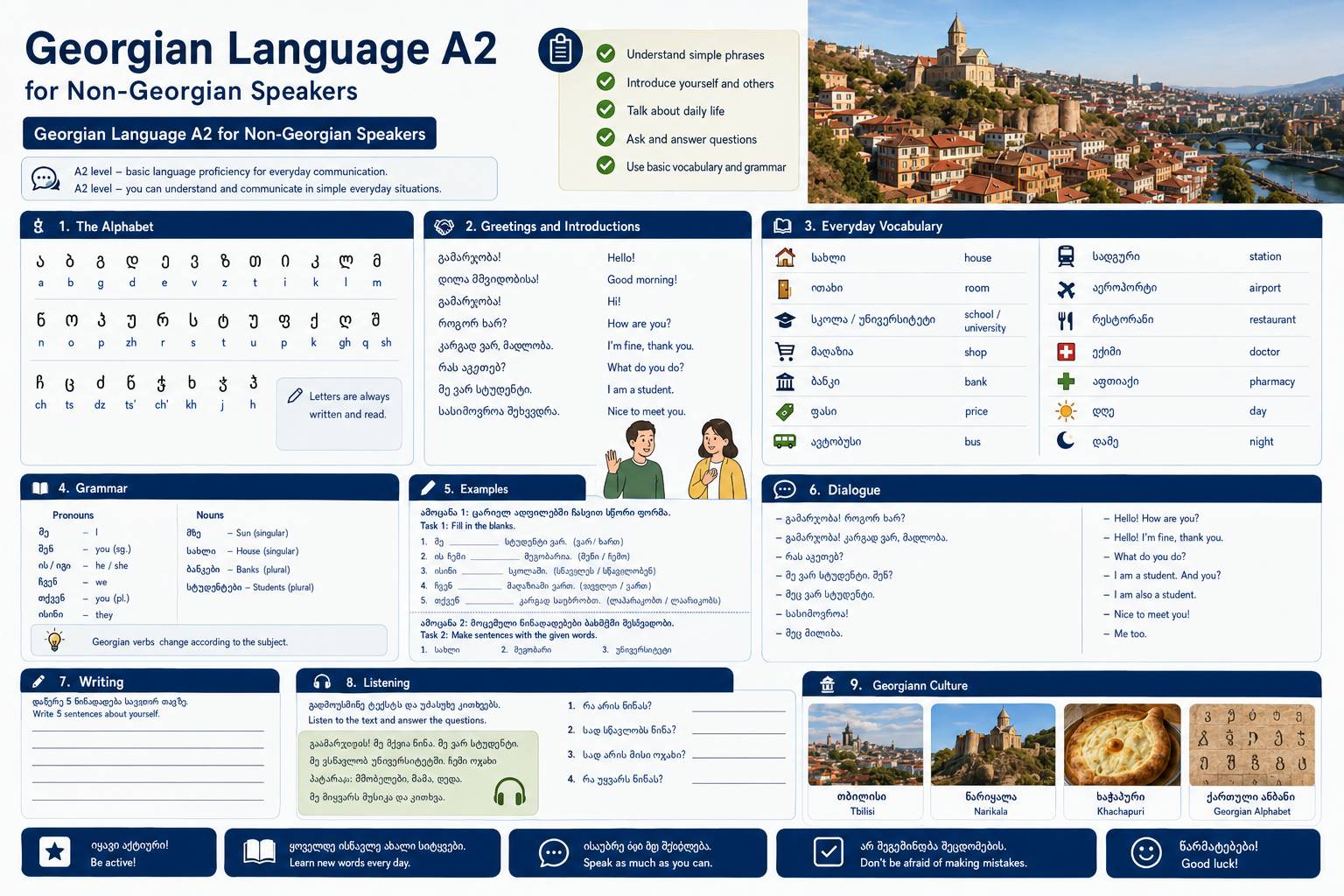
Georgian Language A2 – for Non-Georgian-Speaking Students
This module is intended for non-Georgian-speaking students and aims to develop basic communication skills in the state language. Students learn to understand conversations on everyday topics in Georgian and to participate in simple dialogues. The module develops initial listening, speaking, reading and writing skills.
Students become familiar with vocabulary related to greetings, polite forms of communication, personal information, family and everyday needs. The learning process includes role plays, pair work, practical exercises and audio-visual materials. Students learn to read familiar texts, understand their content and convey basic information.
The module includes the preparation of short informational texts, observing elementary rules of spelling and punctuation. Particular attention is paid to the practical use of the language in simple communication situations related to the profession. Students learn to express their opinions simply in Georgian and communicate on everyday matters.
Upon completion of the module, students are able to communicate in Georgian at a basic level, understand information and create simple texts.
Read More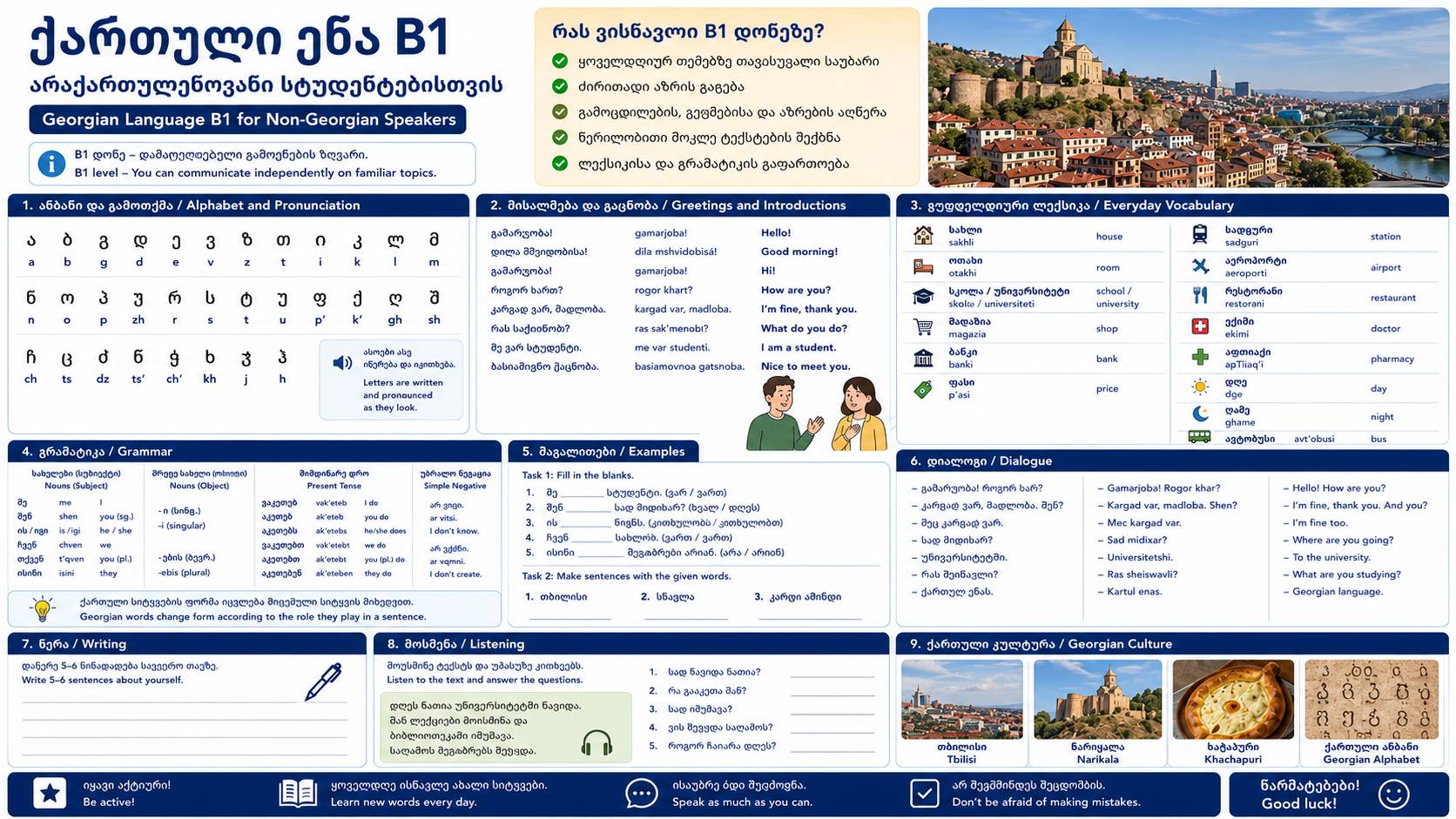
Georgian Language B1 – for Non-Georgian-Speaking Students
This module is intended for non-Georgian-speaking students and aims to develop more independent communication skills in the state language.
Students learn to understand conversations and express their thoughts on every day, household and familiar professional topics. The module develops listening, reading, writing and speaking skills in a wider range of communication situations.
Students become familiar with vocabulary related to biography, employment, travel, health, trade and public services. The learning process includes discussions, case studies, role plays, presentations and text-based learning strategies.
Students learn to read, understand and summarize different types of texts and relate them to their personal experience. The module includes the development of skills in writing personal and business letters, a CV, a motivation letter and a short report.
Particular attention is paid to the practical use of the Georgian language in a professional environment and the correct identification of relevant terms. Students learn to prepare presentations, participate in dialogues and discussions, and express their own position.
Upon completion of the module, students are able to communicate independently in Georgian in everyday and professionally important situations.
Read More